New Issue of Kritika & Kontext
Despite the complexity of a capitalist economy, or perhaps because of that complexity, it seems only natural that we would want to understand more clearly how to make capitalism work better. one argument is that capitalism should be relatively unfettered, “run” by entrepreneurs and capitalists; another argument is that it requires some kind of intervention from the government to work effectively. Thus, as the persistence of the debate between our two great economists makes clear, there is little agreement about what an effective capitalism requires. In other words, we seem saddled with capitalism, but we fundamentally disagree about how it operates and what is needed to make it work well.
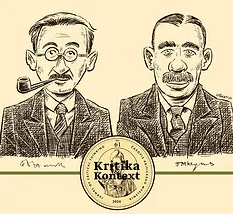
New issue of Kritika & Kontext, No. 61 on the architects of capitalism John Maynard Keynes and Friedrich Hayek
We are proud to present the 61st issue of the journal of critical thinking Kritika & Kontext on the two architects of capitalism, John Maynard Keynes and Friedrich August von Hayek. The issue boasts contributions from renowned scholars, e.g. Bradley Bateman or Roger E. Backhouse, who published books on the two economic powerhouses and offers articles on their continued relevance, critiques, and application to policy. The Hayek-Keynes debate carries on in economic, social, philosophical, and policy-making circles and is worth a re-exploration from a vantage point when building blocks of democracies are on a shaky ground.
The publication was launched at the BIH discussion with the former Vice Prime Minister and Minister of Finance Ivan Mikloš, with an introductory lecture by Bradley W. Bateman.
Bratislava Institute of Humanism Discussions
As every year, BISLA was abuzz with several public discussions for student and broad public audience alike. Here are the highlights of events, for a more complete list, peruse our News section on BISLA website.
[icon name=”signature” prefix=”fas”]
Slovak Politics in the Wake of the May 15 Shooting
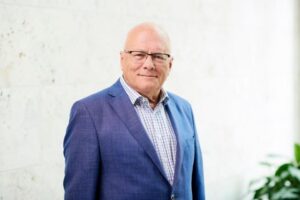
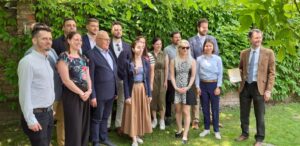
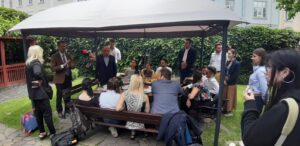
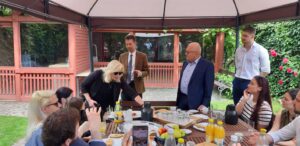
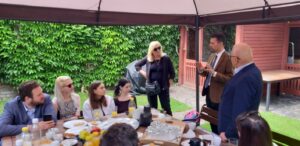
On May 27, we welcomed Professor Péter Balázs, the former Minister of Foreign Affairs and EU Commissioner, professor emeritus at CEU Budapest, and his City Diplomacy Academy students, who were on a study trip to Bratislava. Professor James Thomson, who lectures in history and information studies at BISLA and has worked as an editor and journalist in Slovakia for more than 10 years, provided an introductory lecture on the Slovak situation, followed by insights and reflections by Professor Balázs and his students on Slovakia, Slovak-Hungarian relations, the Visegrád Group, and European politics. After the panel, discussions continued more informally in the garden,
Since his 2023 re-election, and especially after the recent assassination attempt against him, Robert Fico and his role in Slovak politics have been more intensively reported on the front pages of the international press. The May 15 shooting has also confirmed the devastating trend of hate speech and violence and its incalculable consequences for an East-Central European country once perceived as a discrete model of successful Euro-Atlantic integration. What are the reasons behind this spiral of violence, from the 2018 assassination of Ján Kuciak to the May 15 attempt and the deterioration of Slovak public life? What does the situation look like from the point of view of neighboring countries? Is there an impact on European politics less than a month before the EP elections?

[icon name=”signature” prefix=”fas”]
Egon Gál and František Novosád: What is the Origin of Evil?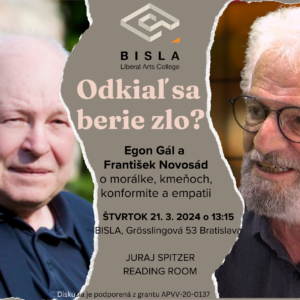
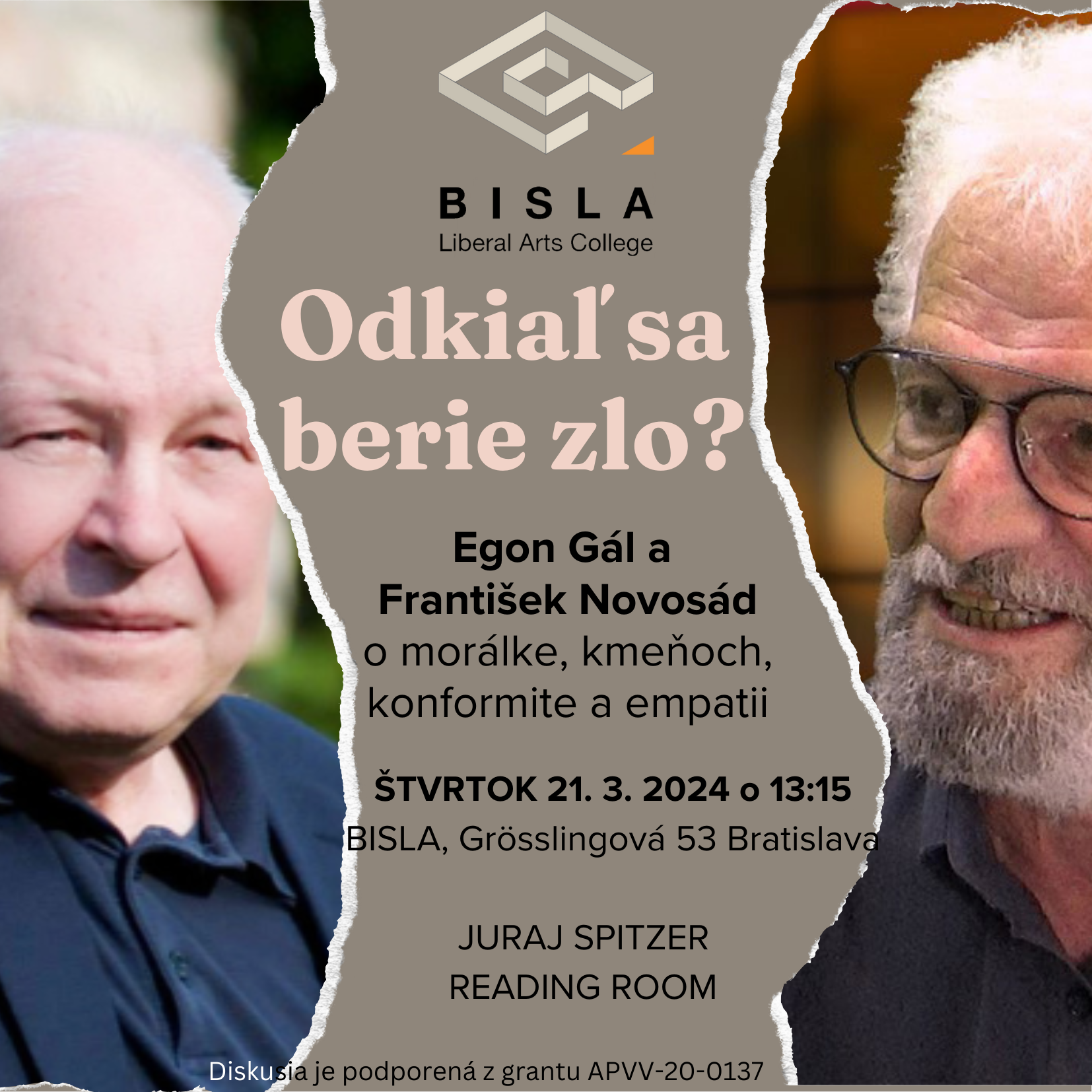
In March, students of BISLA discussed the moral and ethical dilemmas of present day and age, societal divides, growing tensions and violence in Slovakia and globally, growing isolation and lack of trust — all within the context of scholarship on human nature, and the origin of evil.
The discussion drew from variety of disciplines–moral philosophy, religion, but also neurobiology, anthropology, and psychology.
The pressing question of the day was how to counter the “evil” tendencies in societies and ourselves and how to find inner sources of optimism and meaningfulness.
[icon name=”signature” prefix=”fas”]
Juraj Buzalka: Who Are the Modern Slovaks?
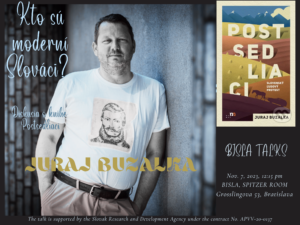
Discussion with Juraj Buzalka
Following the publication of his bestselling book, The Post-Peasants, Juraj Buzalka came to BISLA to chat with the students about the key arguments dissected in the book: the socio-historical underpinnings of the Slovak political culture, the importance and heritage of the late “solving of the peasant question” (in the words of the macro-sociologist Barrington Moore), and the incursions of the idealized agricultural archetypes into political discourse and behavior.
The discussion also pointed in the direction of the potential effective use of this heritage to modernize liberal political discourse and bring it down the ladder of abstraction to the voter from the countryside, as well as the challenges of polarization of the society for its future development.